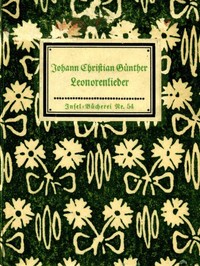
Leonorenlieder by Johann Christian Günther

(1 User reviews)   3592
By Ava Marino Posted on Nov 15, 2025
In Category - Expedition Notes
Günther, Johann Christian, 1695-1723 Günther, Johann Christian, 1695-1723
German
Ever wonder what it was like to be a poet in the 1700s, caught between love, ambition, and the expectations of your family? That's the heart of Johann Christian Günther's 'Leonorenlieder'. This isn't just a collection of old poems; it's the raw, unedited diary of a young man's soul. He pours his love for a woman named Leonore onto the page, but his father wants him to be a doctor, not a lovestruck writer. The real mystery isn't in the plot, but in the man himself: can passion and art survive when the world tells you to be practical? It's a surprisingly modern struggle wrapped in beautiful, centuries-old verse.
Share

Read "Leonorenlieder by Johann Christian Günther" Online

This book is available in the public domain. Start reading the digital edition below.

START READING FULL BOOK
Instant Access    Mobile Friendly

Book Preview

A short preview of the book’s content is shown below to give you an idea of its style and themes.

Doch wer sich zwingt und hofft, der kommt gleichwohl ans Land. Was leid' ich nicht um dich, Du mir ins Herz geprägtes Bild! Die Sehnsucht jaget mich, So wie ein schüchtern Wild; Mein Schlaf ist nur ein Qualm, Mein Lied ein Klagepsalm, Die Angst der bangen Einsamkeit Begräbt mich vor der Zeit, Weil ich den Kuß Entbehren muß, Der so viel Lust verspricht; Doch hoff' ich, alles auszustehn, verlass' nur du mich nicht! Verlass' nur du mich nicht, Du Engel, dessen treuer Geist Und holdes Angesicht Mir noch den Troststern weist; Der Himmel wird einmal Uns nach so vieler Qual Der Hoffnung Siegeskranz verleihn Und mich durch dich erfreun! Drum liebe still, Wie ich auch will, Und sieh geduldig zu; Die Straße, so uns jetzo trennt, führt unvermerkt zur Ruh. Ich liebe meinen Schmerz, Weil du, mein Engel, Ursach' bist, Du hast mein ganzes Herz, Dies raubt dir keine List. Was hilft's uns, daß man weint? Was jetzt unmöglich scheint, Das ist gewiß ein Übergang, Der Grillenfang macht krank. Es rühret mich Schon innerlich Ein Trieb der Zärtlichkeit, Die mir dein künftiger Besitz sowie dein Name beut. An seine Magdalis Aria. Erzählt, ihr kalten Nordenwinde, Die Seufzer meiner Schäferin, Verkündigt dem verlass'nen Kinde, Daß ich der alte Redlich bin, Und macht ihr diese Botschaft kund: Das Herze liebet wie der Mund. Des Monden Antlitz sieht die Fluten Der stummen Wehmut kläglich an; Die Geister wollen mir verbluten, Weil ich mein Kind nicht sprechen kann. Ich denke der vergangnen Zeit, Von der mich die Verschwendung reut. Der Elbstrom fällt mir in die Augen, Sein Eis erhitzet meinen Geist; Ach, könnt' ich jetzt die Küsse saugen, Die mich zuvor vollauf gespeist, Ich wollte meinen Fuß bemühn Und gar von hier nach Breslau ziehn. Geliebtes Schweidnitz, das Vergnügen, So mich bei dir im Schoße trug, Wird nicht so bald mein Herz besiegen, Das von der Wollust heftig schlug, Wenn die getreue Magdalis Mich brünstig in die Armen riß. Die Zeiten sind bereits gestorben: Drum fluch' ich der Vergänglichkeit, Die mir und ihr den Schmerz erworben, Den unser Abschied prophezeit, Da mich das werte Sachsenland Von meiner Schäferin getrannt. Getrannt, doch nur auf kurze Jahre! Verliebte Sehnsucht, fasse dich: Der Kummer findet seine Bahre, In dieser Hoffnung tröst' ich mich Und lege mir den Wahlspruch bei: Bedrängt, geduldig und getreu. An seine Leonore Schicke dich, geliebtes Kind, In die unruhvollen Zeiten; Dann und wann kann Sturm und Wind Unverhofft in Hafen leiten. Nun ist wohl niemand besser dran, Als wer getreu und klug und ewig lieben kann. Als er seiner Magdalis nichts zum grünen Donnerstag geben konnte Getreue Magdalis! Du forderst zwar den Zoll, Der jährlich wiederkommt, zum grünen Donnerstage; Doch meine Hand weiß nicht, was sie dir geben soll, Weil ich in selber nichts als Luft und Mangel trage. Kein guter Marzipan, kein Mantel von Damast Läßt meiner Armut zu, dich reichlich zu bedenken, Und weil du gestern schon mein Herz gestohlen hast, So steht es nicht bei mir, es heute dir zu schenken; Doch alles möchte sein, wenn mich die Poesie Des Kummers, deinen Wunsch zu stillen, überhübe. Allein, sie wegert sich. Drum nimm, wo nicht zu früh, Hier die Beständigkeit von meiner reinen Liebe. An Leonoren Zwischen Ufer, Tal und Klüften Ließ der treue Saladin Mit den kühlen Abendlüften Tausend heiße Seufzer fliehn, Weil kein längst gehoffter Brief Seinem Wunsch entgegenlief. Die Gewalt verliebter Schmerzen Warf ihn kraftlos in das Gras, Wo er mit bedrängtem Herzen Und gestütztem Arme saß; Endlich wollte seiner Pein Brust und Herz zu enge sein. Zeuch nur (sang er), schöne Gegend, Deiner Triften Reizung ein! Jetzo...

This is a limited preview. Download the book to read the full content.

Johann Christian Günther's Leonorenlieder is a collection of poems written in the early 1700s, but it feels more like a secret journal. The poems are all centered on his deep, often desperate, love for a woman named Leonore Jachmann. Through them, we follow the emotional highs and lows of a young poet completely captivated.

The Story

There's no traditional plot with chapters. Instead, the "story" unfolds through the poems themselves. We see Günther's joy when he's with Leonore, his despair when they're apart, and his growing anguish as his future becomes a battleground. His father, a stern doctor, demanded he pursue a stable medical career and saw poetry as a frivolous waste of time. The poems become his rebellion, his only way to cling to his true self and his love against mounting pressure to conform.

Why You Should Read It

You should read this to connect with a human being, not just a historical figure. Günther's voice is startlingly direct. His struggle between following his heart and obeying his family is something anyone can understand, even 300 years later. The poems are full of vivid, sometimes wild, emotion—it's the opposite of stuffy or academic. You get the sense he had to write these words to breathe.

Final Verdict

This book is perfect for readers who love biography and raw emotion more than complex plots. If you've ever enjoyed peeking into someone's personal letters or diary, you'll find that same intimate thrill here. It's also a great pick for poetry newcomers curious about the 18th century, as Günther's feelings are so universal they break through the older language. Just be prepared—it's a passionate, and ultimately heartbreaking, ride.


⚖️ Public Domain Content

Legal analysis indicates this work is in the public domain. Share knowledge freely with the world.

Linda Thompson
1 year ago

Based on the summary, I decided to read it and the plot twists are genuinely surprising. Highly recommended.

3
3 out of 5 (1 User reviews )

Add a Review

Your Rating *
There are no comments for this eBook.
You must log in to post a comment.
Log in


Related eBooks