
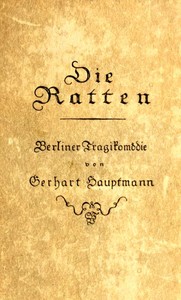
Die Ratten: Berliner Tragikomödie by Gerhart Hauptmann
Read "Die Ratten: Berliner Tragikomödie by Gerhart Hauptmann" Online
This book is available in the public domain. Start reading the digital edition below.
START READING FULL BOOKBook Preview
A short preview of the book’s content is shown below to give you an idea of its style and themes.
Gerhart Hauptmann's Die Ratten (The Rats) isn't your typical polite stage drama. It throws you right into the grimy, overcrowded heart of early 1900s Berlin, in an apartment that's more of a pressure cooker than a home.
The Story
The plot hinges on a secret baby. Frau John, a cleaning woman who can't have children, is desperate for a family. She buys a newborn from a young servant, Pauline Piperkarcka, who wants to hide her pregnancy. Frau John passes the baby off as her own to her husband, a construction foreman. But secrets in a crowded tenement have a way of escaping. Pauline has regrets, a shady former lover shows up, and a philosophical former theater director who rents the attic room watches the whole messy situation unfold. What starts as a private arrangement becomes a public scandal, pulling in everyone from the building's owner to the police, exposing the fragile lines between desperation, love, and survival.
Why You Should Read It
What grabbed me is how alive it feels. The characters aren't symbols; they're flawed, loud, and painfully human. You cringe at their bad decisions, but you understand the hunger driving them—for a child, for status, for a scrap of dignity. Hauptmann has this incredible ear for how people really talk, mixing profound sadness with sudden bursts of crude, laugh-out-loud humor. It shows how tragedy and comedy are often roommates in real life. The 'rats' of the title aren't just pests in the walls; they're a metaphor for the gnawing anxieties and the people society tries to ignore, all scrambling in the dark.
Final Verdict
Perfect for readers who love character-driven stories that pack an emotional punch without being sentimental. If you enjoy the messy, interconnected dramas of tenants in a building (think a grittier, pre-war version of that vibe), or if you're interested in how literature captured the seismic social shifts of the modern city, this is a brilliant, brisk read. It’s a classic that doesn’t feel dusty at all.
Legal analysis indicates this work is in the public domain. Thank you for supporting open literature.


Karen Hill
1 year agoClear and concise.